Weight Bench Specs That Matter: Pad, Height, Capacity
Weight bench specs that affect safety: pad width, height and true weight capacity, sourced from manufacturer data and a CPSC recall record.
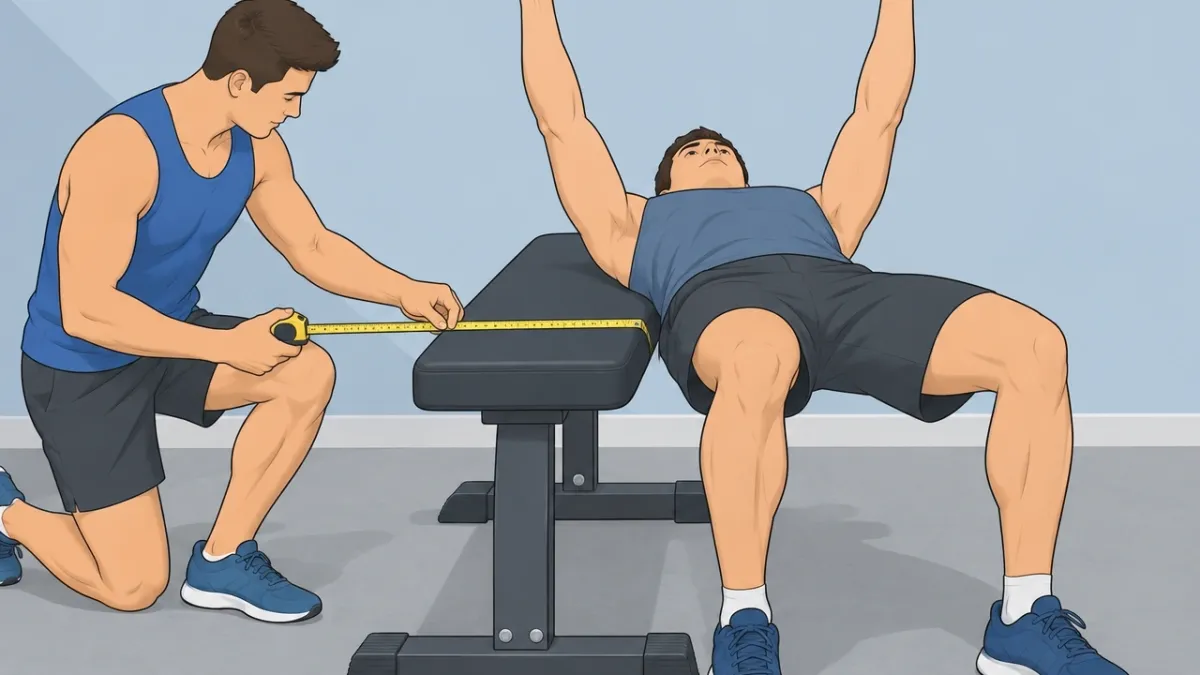
Weight bench specs that actually decide whether a bench is safe to load are pad width (roughly 10.5 to 12.5 inches), bench height (about 17 to 18 inches off the floor), and the frame's published weight capacity, tied to a stated steel gauge rather than a sticker number. Get these wrong and the failure is not cosmetic: a narrow pad lets your shoulder blades slide off mid-press, a bench at the wrong height breaks your leg drive, and a frame loaded past an unverifiable rating is a structural risk, not a comfort issue. This guide covers what each spec means, how to read a capacity number instead of trusting it, and when a bench needs to be retired rather than repaired.
Pad Width: The Spec That Decides Whether Your Shoulders Stay Planted
During a bench press, your shoulder blades need to stay retracted and pinned against the pad for the whole rep. If the pad is narrower than your shoulder width, one or both blades ride off the edge, which flattens your arch and shifts load onto the shoulder joint instead of the chest and triceps, where it belongs. On the Competition Flat Weight Bench that Barbell Standard publishes specs for (read 2026-09-19), the pad measures 11.625 inches wide, which sits inside the roughly 10.5 to 12.5-inch range most flat and adjustable benches use. A pad under 10 inches is usually a budget cue, and one padded out to 14 inches or more is typically built to a specific federation's competition rule, not a home-gym default. Measure your own shoulder width, across the back, arms at your sides, before buying an entry-level bench that lists pad width only in marketing copy and not on a spec sheet.
Bench Height: Why the Floor-to-Pad Number Changes Your Leg Drive
Bench height decides whether your feet plant flat with your knees bent near 90 degrees, which is what lets your legs push into the floor and stabilize the bar path. The same Barbell Standard spec page lists its Competition Flat Weight Bench at 16.75 inches tall at the top of the pad, which sits at the low end of the 17 to 18-inch band most flat benches and competition federations build around. A bench that sits noticeably higher than that for a shorter lifter, or one that is unusually low for a taller lifter, forces either a heel-up stance or a hyperextended lower back to compensate, and that is a form problem before it becomes a comfort complaint.
Weight Capacity: Read the Rating, Do Not Estimate It
Weight capacity claims across the market run from a few hundred pounds up to 1,000 pounds or more, and the number by itself tells you little without the frame construction behind it. The Barbell Standard bench cited above pairs its published capacity with an 11-gauge, 2-by-2.75-inch steel tubing frame; that pairing of a stated capacity with a stated steel gauge is what makes a rating checkable instead of a marketing claim. When a listing gives a capacity number with no steel gauge, weld spec, or independent test standard attached, treat it as unverified.
The math that matters is combined load, not just the bar. A 200-pound lifter pressing 250 pounds puts roughly 450 pounds through the pad and frame at the bottom of the rep, before counting any bounce or the uneven load if a spotter has to catch one side first. A frame rated at or barely above your combined load defeats the purpose of a published margin. Before finalizing a bench's capacity, it helps to plan the home gym free weights setup around it first, since the bar and plates you choose set the combined load the bench and its frame need to survive over years of use, not just the first session. The bar itself is part of that math too: sleeve length and diameter affect whether it clears your rack's hooks at bench height, a distinction covered in the Olympic bar versus standard bar comparison.
The Real Hazard Behind a Weak Frame
The hazard behind an underrated or fatigued frame is a structural collapse under load, not a squeak or a wobble you can live with. In January 2014, the U.S. Consumer Product Safety Commission and Cybex International recalled about 234 Olympic decline free weight benches after the company received nine reports of frame welds fatiguing near the joint, with the hazard described as the frame collapsing forward onto the user during use (CPSC recall record, read 2026-09-19). No injuries were reported in that recall, but the failure mode, a weld that fatigues under repeated loading until the frame gives way mid-rep, is the same mechanism a home bench faces if it is loaded past its rated capacity or if a weld had a manufacturing flaw from the start. A bench pressed under a loaded bar with no spotter and no rack safety pins is a drop-injury risk independent of frame quality: if the frame fails or the lifter fails, the bar has nowhere to go but down onto the chest or face.
Base and Foot Design: What Stops a Bench From Rocking
A bench that passes every published spec can still rock if its foot design is wrong for the load. Look for a base wide enough front-to-back and side-to-side that pushing down hard on any single corner does not lift the opposite one. Test this by hand before the first loaded session, not after you are already under a bar. A bench that rocks on a floor you have confirmed is level should not be loaded until the base is fixed or the bench is replaced.
The floor underneath matters as much as the bench's own base. A concrete slab that is already cracking under a rack's feet changes how a bench's base sits over time, which is worth checking through protecting a concrete slab from cracking under drop zones before you add a heavy bench to the same area. If the bench is going upstairs rather than into a garage, a wood-framed floor that flexes slightly under load also changes stability, which is covered in what to check before loading heavy equipment onto a wood subfloor.
When a Bench Stops Being a Buying Decision and Becomes a Stop-Using Decision
If you see a crack at a weld, rust developing at a load-bearing joint, a pad torn through to the frame, or rocking on a floor you have already confirmed is level, stop loading the bench immediately. Welding a cracked frame back together at home is not a safe fix: a weld that has already fatigued and failed once has a compromised heat-affected zone around it, and a repair that looks solid can fail again under load without warning. A proper repair or replacement is a decision for the manufacturer's service line, the way Cybex handled its 2014 recall directly with owners, or for a certified welder who can evaluate the whole frame, not a bead run in a garage. Do not load the bench again until one of those two has signed off on it.
Weight Bench Specs Checklist Before You Buy
- Check the listed pad width against your own shoulder width, not the marketing photo.
- Confirm bench height sits in the 17 to 18-inch band, or test your own leg drive on the floor model.
- Look for a stated capacity number paired with a steel gauge or an independent test standard, not a number alone.
- Push down on each corner of the base on a level floor before the first loaded rep.
- Size capacity to your true combined load, bodyweight plus bar plus plates, with margin below the rated maximum, not exactly at it.
FAQ
What pad width should a weight bench have? Match it to your own shoulder width measured across the back. Most adults are covered by the roughly 10.5 to 12.5-inch range that most flat and adjustable benches use; narrower pads are typically a budget-model cue.
How tall should a weight bench be? Most flat benches sit 17 to 18 inches from floor to pad, which lets an average-height lifter plant both feet flat with knees near 90 degrees for full leg drive during the press.
How much weight capacity does a home bench need? At minimum, your bodyweight plus the heaviest bar and plate combination you plan to lift, with margin left below the bench's rated maximum rather than loading right up to it.
Can I repair a cracked weld on a bench myself? No. A weld that has already fatigued and cracked has a compromised area around the break, and a home repair can look solid while still being unsafe to load. Stop using the bench and contact the manufacturer or a certified welder.
Does a heavier bench automatically mean a safer bench? Generally, a bench with a genuinely high capacity carries more steel mass to support it, since the frame has to be built to hold the load, not just labeled for it. A very light bench sold with an unusually high capacity number and no steel gauge listed is a claim worth questioning rather than trusting.