Apartment Home Gym Setup: What Is Actually Possible
An honest apartment home gym setup guide: check the lease, the floor, the neighbor below and storage, in that order, before you buy anything.
Short answer: a real apartment home gym setup is possible, but it is built around four constraints stacked on top of each other, and most guides only address one. In order: what your lease allows, what your floor was designed to carry, what the neighbor below will hear, and whether the equipment can disappear when you need the room back. Compact free weights, a bench and a good mat pass all four in most apartments. A full rack with a barbell you set down hard, or a treadmill you run on, usually fails at least one. Check the four constraints before you buy anything.
Why apartment advice usually goes wrong
Most home gym content is written for someone with a garage: a concrete slab, no one below, no landlord, and a door that closes on the mess. Much of the page-one advice for apartments is also published by companies that sell the equipment they recommend, which is fine as far as it goes, but a seller has no reason to tell you that your lease, your floor or your neighbor rules a product out.
The other common mistake is treating two different questions as one. "Can my floor take it?" is a structural question. "Will the person below complain?" is a noise question. A floor can be perfectly safe and still carry every thud to the ceiling below. A quiet setup can still be a problem if it concentrates a lot of weight in one spot. They get separate answers here.
Constraint 1: the lease comes first
Before the floor, before the equipment, read the document you signed. Leases commonly deal with alterations (drilling, mounting, anything that changes the unit), noise and quiet hours, floor coverings, and sometimes heavy items or appliances. Whether any of that applies to a home gym depends on your lease's exact wording and on state, provincial and local law, which vary widely across the US and Canada.
Two practical points:
- Anything that goes into a wall or ceiling is an alteration. Wall-mounted racks, pull-up bars screwed into a frame, ceiling anchors: these are the items most likely to need written permission. Ask before you drill, not after.
- Get permission in writing. If you ask the landlord or property manager, a reply in email or through the tenant portal is something you can point to later. A conversation in the hallway is not.
If the lease is unclear, that is a question for the landlord, and for anything that turns into a dispute, a local tenant rights organization or a lawyer licensed where you live.
Constraint 2: what the floor was designed for
This is where apartment guides get vague, so here is the number most of them skip, with its limits attached.
The International Building Code sets minimum floor live loads by use. An International Code Council interpretation of IBC Table 1607.1 (ICC Interpretation No. 42-07, 2006 IBC edition, issued December 7, 2007, read 2026-09-25) shows a uniform live load of 40 pounds per square foot for private rooms in multiple-family dwellings, and 100 pounds per square foot for public rooms and the corridors serving them. The same interpretation names exercise rooms among the public rooms.
Read that carefully, because it says three things at once:
- Your apartment's floor was designed for a spread-out load, not for one heavy object on a small footprint. A design value in pounds per square foot describes weight distributed across the floor.
- Your building's own fitness room, where one exists, falls under a higher design category than your living room under that table. That is part of why heavy equipment belongs there by design.
- It is a minimum, from one code edition. Your building may be older, built under a different edition, built above the minimum, or in a jurisdiction that amended the table. You cannot tell by looking.
What this means in practice: spreading weight out, keeping heavy items near walls rather than mid-span, and not concentrating everything in one corner all work in your favor. For the full reasoning, including why a design number is not a safe limit to aim for, read our guide to home gym floor weight limits, and if you are above the ground floor, what changes for a home gym on the second floor.
If you are planning anything genuinely heavy, such as a loaded rack, a large plate collection or a heavy machine, the person who can tell you what your floor will carry is a structural engineer, and in a rental the request goes through the building owner.
Constraint 3: the neighbor below
Noise is the constraint that ends most apartment gyms, and it is mostly about impact, not volume. A dumbbell set down hard, a kettlebell placed on the floor between sets, a jump, a running footstrike: each one travels into the floor structure and comes out of the ceiling below. Music and a fan whoosh travel much less far.
Three rules follow from that:
- Choose equipment you can set down quietly. Adjustable dumbbells with a cradle, a bench to set weights on, and rubber-coated items make controlled set-downs easier.
- Put a real mat under anything that touches the floor with weight. Thickness and material matter more than the label on the package, and a thin foam tile does a different job from dense rubber.
- Know what room is below you. A bedroom below and early morning sessions is the worst combination.
Constraint 4: it has to disappear
In a small apartment, the gym is usually also the living room, the bedroom, or the hallway. Equipment that cannot be packed away becomes furniture, and furniture you resent tends to get sold. Measure the storage spot (under the bed, a closet floor, behind a door) before you measure the training spot, and write down both. Our step-by-step guide to measuring space for gym equipment covers the clearances people forget.
What passes all four constraints, and what usually fails
This table sorts common equipment by the four constraints. It describes typical designs, not specific products, and your lease and floor can change any row.
| Equipment | Lease risk | Floor load | Noise downward | Packs away? | Usual verdict |
|---|---|---|---|---|---|
| Resistance bands, suspension trainer on a door anchor | Low | Negligible | Very low | Yes | Passes |
| Adjustable dumbbells with a stand or cradle | Low | Concentrated but modest | Low if set down with control | Mostly | Passes in most units |
| Kettlebells (a few) | Low | Modest | Moderate; floor contact is the risk | Yes | Passes with a mat |
| Folding or upright-storing bench | Low | Modest | Low | Yes | Passes |
| Freestanding squat stand, no bolting | Low | Depends on the load you plan | High if weight is dropped or racked hard | Partly | Ground floor or building gym |
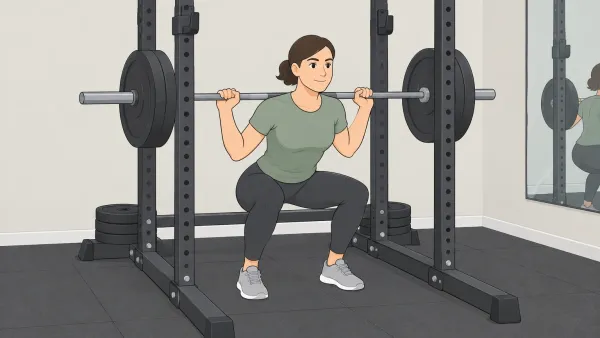
| Full power rack with barbell and plates | Medium to high if anchored | High and concentrated | High | No | Usually fails upstairs |
| Wall-mounted folding rack | High (drilling) | Moderate | High | Yes | Needs written permission and a professional install |
| Exercise bike (magnetic) | Low | Moderate | Low | Sometimes | Passes in most units |
| Treadmill used for running | Low to medium | Moderate | High | Folding models only | Usually fails upstairs |
A pattern falls out of the table. The items that pass everywhere are the ones that do the most with the least floor contact. For how to sequence those purchases, see what to buy first for a home gym.
Electrical and fixing: where this stops being a DIY question
Two items in an apartment gym can cross from "buying" into "building work":
- Anything with a motor. Treadmills in particular come with manufacturer instructions about circuits and extension cords that differ by model. Read the manual for your exact model. Adding a circuit or an outlet is work for a licensed electrician, and in a rental it is the landlord's decision, not yours.
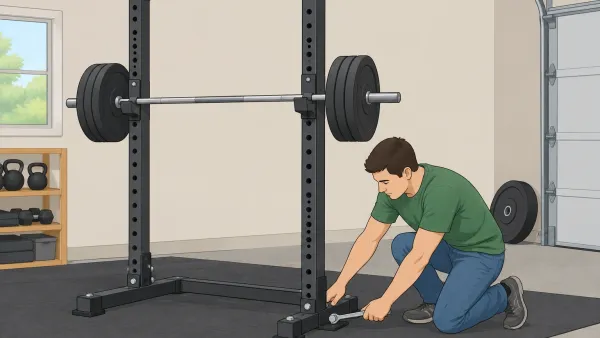
- Anything fixed to a wall or ceiling. What a wall can hold depends on what is behind the surface. That is a question for a qualified installer or a structural engineer, and in an apartment it also needs the owner's permission.
Do not buy anything yet if...
- You have not read the alterations and noise sections of your lease.
- You do not know what room is directly below the space you plan to use.
- You plan to set weights down on the floor and have no mat budgeted.
- The item you want cannot be stored anywhere you have actually measured.
- The item needs drilling and you do not have written permission.
Who an apartment home gym setup is wrong for
Be honest with yourself about one case: if what you want to do requires heavy barbell work with weights set down hard, or running at speed, an upper-floor apartment is working against you on two constraints at once. Some apartment buildings have a fitness room designed for exactly that load. Using it for the heavy work and keeping the apartment for what passes the table above is a legitimate setup, not a failure.
FAQ
Can you have a home gym in an apartment?
Yes, for most people, if the setup is built around the lease, the floor, the neighbor below and storage. Compact free weights, a bench, bands and a mat pass all four in most units. Heavy racks and running treadmills are where upstairs apartments usually run into trouble.
How much weight can an apartment floor hold?
An ICC interpretation of IBC Table 1607.1 (2006 edition) lists 40 pounds per square foot as the minimum uniform design live load for private rooms in multifamily dwellings. That is a spread-out design value from one code edition, not a safe limit for concentrated equipment. A structural engineer, through the building owner, is the person who can answer for your floor.
Is it OK to drop weights in an apartment?
Dropping weights is the fastest route to a noise complaint and can damage floors. Choose equipment you can set down with control, and put a proper mat under anything that touches the floor with weight.
Do I need my landlord's permission for a home gym?
It depends on your lease and local law. Drilling or mounting anything is the most common trigger for needing permission, and some leases also address noise, floor coverings or heavy items. Ask in writing before installing anything fixed.
What equipment should come first in a small apartment?
Items that do the most with the least floor contact: adjustable dumbbells with a cradle, a bench that stores upright or folds, resistance bands and a mat. They pass the lease, floor, noise and storage checks in most apartments.